If you've spent time building artificial intelligence systems in practice, you know that flashy headlines about AI breakthroughs rarely capture the quiet grind behind them. The real story isn't about isolated algorithms or sudden leaps in intelligence. It's about tools—solid, reliable, and often underappreciated tools—that let developers turn theory into working models, scale prototypes, and deploy systems that function in the real world. At the heart of this process today are what many call AI development tools. But what exactly do we mean by that, and which ones actually matter when deadlines are tight and performance demands are high?
What AI Development Tools Actually Mean on the Ground
Let's clear the air: the phrase "AI development tools" sounds broad, almost vague, but in software teams working on machine learning, it has a very specific meaning. It's not just software libraries. It's the entire stack—frameworks, compilers, hardware interfaces, orchestration systems—that allow engineers to write, train, and deploy models efficiently. You might start with an idea scribbled on a whiteboard, but soon enough you’re wrestling with batch sizes, GPU memory limits, and model serving latency. That’s where these tools become more than conveniences—they become survival gear.
Take PyTorch, for example. Its dynamic computation graph made a huge difference for researchers needing flexibility during model exploration. In the early 2010s, switching from static frameworks felt like trading a typewriter for a word processor. Suddenly, debugging became more intuitive because you could inspect tensors at each step. That interactivity encouraged experimentation. TensorFlow followed, bringing its own strengths—particularly in static graph optimization and deployment workflows. Both have evolved. TensorFlow now supports eager execution, and PyTorch has strengthened its graph compilation with TorchScript and TorchDynamo. But the choice between them still influences everything from prototyping speed to deployment pipelines.
The Frameworks That Shape Workflows
PyTorch didn’t become dominant overnight. It gained ground partly because of platforms like Hugging Face, which made sharing pretrained models practical. When researchers at institutions like DeepMind or Meta published model checkpoints, Hugging Face provided a consistent interface to load and fine-tune them. Want to experiment with a transformer-based model? A few lines in PyTorch, pull a model from Hugging Face, and you're running inference almost immediately. That lowered the barrier to entry, but also created new pressures. Suddenly, the problem wasn't access to models—it was managing dependencies, compute, and version control at scale.
That's where tools like Kubeflow come in. It offers a way to orchestrate machine learning workflows on Kubernetes, giving teams some clarity in a messy space. But getting Kubeflow to work seamlessly with PyTorch or TensorFlow still demands a lot of glue code. And as models grow larger, distributed training becomes unavoidable. Frameworks like Ray help manage distributed tasks, but they add complexity. Threads, memory sharing, network overhead—these aren't abstract concerns. If your data parallelism strategy doesn’t align with your hardware topology, your training job can crawl no matter how many GPUs you throw at it.
Compilers, Compute, and Hidden Dependencies
Underneath all of this is a layer most developers interact with only indirectly: the hardware abstraction layer. CUDA, developed by NVIDIA, has been a privileged interface to GPU acceleration for over a decade. It's so deeply embedded in the ecosystem that many AI tools assume its presence. Want to run TensorFlow on a GPU? You're likely using CUDA under the hood. Libraries like cuDNN accelerate convolutions and other operations critical to deep learning. But that dependency comes at a cost: lock-in. That’s why Intel oneAPI and AMD’s ROCm platform exist—to offer alternatives based on open, cross-vendor standards. The idea isn’t just competition; it’s resilience. If all your AI tools depend on one proprietary stack, you’re vulnerable to pricing shifts, supply constraints, and roadmap changes.
AMD’s ROCm, for example, supports frameworks like PyTorch and TensorFlow through MIOpen and HIP abstractions. It’s not a drop-in replacement for CUDA, but it’s functional and improving. This matters because hardware choices no longer follow predictable curves. A data scientist choosing between an NVIDIA DGX system and a server based on AMD Instinct cards isn't just comparing flops and memory bandwidth. They’re evaluating ecosystem maturity—driver stability, debugging tools, container support, even community forums. The chip with the best specs on paper may not be the one that gets your model to production fastest.

Cloud Platforms: Convenience vs Control
This is where the big cloud providers enter the conversation. Amazon SageMaker, Google Cloud AI, and Microsoft Azure Machine Learning offer managed environments that bundle many of these tools into accessible interfaces. Upload your script, pick a compute instance, and click "train." No need to manage Kubernetes clusters or GPU drivers. That’s tempting, especially for small teams or startups without infrastructure teams.
But trade-offs emerge quickly. With Amazon Sage payments for compute, storage, and API calls. That adds up, especially in long-running jobs. More importantly, customization is often limited. Want to use a bleeding-edge version of PyTorch not yet supported by SageMaker? Tied to using custom kernel patches or non-standard Docker base images? You’ll hit a wall. Same with Google Cloud AI and Azure—each has strong integration with their own ecosystem, but pushing outside of it requires workarounds.
These platforms also tend to favor certain frameworks. Azure leans on ONNX for model interoperability, pushing users toward exporting models in a common format that can run across hardware. ONNX Runtime can deliver impressive optimizations, especially on CPU-based inference engines. But dynamic models with control flow—common in PyTorch—don’t always convert cleanly. You might find that your model runs slower or less reliably after conversion than in native PyTorch. That’s a painful lesson to learn after investing in migration.
Specialized Tools for Real-World Challenges
Beyond training, prediction latency and throughput become front and center. NVIDIA Triton Inference Server addresses this by enabling concurrent model serving with dynamic batching. It supports multiple frameworks—TensorFlow, PyTorch, ONNX—in a single server instance, which simplifies deployment in production. If you're serving recommendation models that combine LightGBM trees with neural networks, Triton allows you to orchestrate that efficiently. But again, it’s optimized for NVIDIA GPUs. On CPU or AMD hardware, you’ll need to adapt it yourself or rely on community contributions.
For organizations managing multiple workloads, Databricks offers a different angle. Originally known for Spark-based data processing, it now integrates machine learning workflows through Databricks ML. You can run PySpark training jobs, track runs in MLflow (a popular open-source tracking tool), and schedule batch inference—all within a unified workspace. It’s particularly useful if your pipeline starts with SQL-based data transformation before diving into deep learning. JAX, Google’s alternative to TensorFlow and PyTorch, also integrates here. JAX brings functional purity and just-in-time compilation via XLA, which is great for physics-informed models or high-performance numerical computation. But its learning curve is steeper, and tooling support in managed platforms lags behind.
The Quiet Comeback of Simpler Models
While everyone talks about billion-parameter models, many production systems still run LightGBM or XGBoost. These gradient-boosted tree algorithms handle tabular data more effectively than neural networks in many cases, require less data to train, and produce interpretable outputs. In fraud detection, customer churn modeling, or risk assessment—where regulatory compliance demands explanations—lightweight models often win. Tools like Databricks and Hugging Face now include better support for LightGBM, recognizing that not every problem needs a transformer.

And yet, the demand for larger models persists. OpenAI API usage has exploded, not because everyone needs GPT-class intelligence, but because integration is trivial. A few lines of Python, an API key, and you’re generating text. But this offloading comes with strings attached—cost, latency, data privacy. If you’re processing sensitive data, sending it to a third party is a non-starter. That’s when internal AI development tools become essential. You can’t outsource everything.
What About the Next Generation?
Apache MXNet, though less dominant commercially, still has dedicated users who value its scalability and multi-language support. It’s used in production at companies where resource efficiency on edge devices matters. IBM Watson, meanwhile, provides a managed AI suite focused on enterprise NLP and decision support. It works well if your needs align with its templates—document analysis, customer service chatbots—but customization can be restrictive. You trade control for speed, which works only up to a point.
Looking ahead, the criteria for evaluating AI development tools are shifting. It’s not just about training speed or model accuracy. It's about reproducibility, maintainability, monitoring, and cost tracking. A model that performs well in training but consumes 10 times the energy of a competitor isn’t free—it’s expensive and unsustainable.
Developers are also paying more attention to model lifecycle management. Kubeflow Pipelines helps here, allowing teams to define and track training workflows as code. Ray enables distributed hyperparameter tuning without requiring specialized infrastructure. But these tools assume strong engineering practices. If your team doesn’t use version control for data and models, even the best tools won’t save you from chaos.
Hardware is Part of the Stack, Not an Afterthought
It’s common to treat hardware as a pure cost consideration—more GPU, faster training. But thoughtful teams consider throughput per watt, memory bandwidth, and model parallelism strategies. AMD Instinct accelerators, for example, are designed for dense compute workloads typical in HPC and AI. Paired with ROCm and optimized libraries like MIOpen, they offer a credible alternative to NVIDIA’s stack, especially in environments where vendor diversification is valued. But supporting AMD isn’t always frictionless. CUDA dominates in community tutorials, pre-built containers, and third-party library support. Switching requires effort.
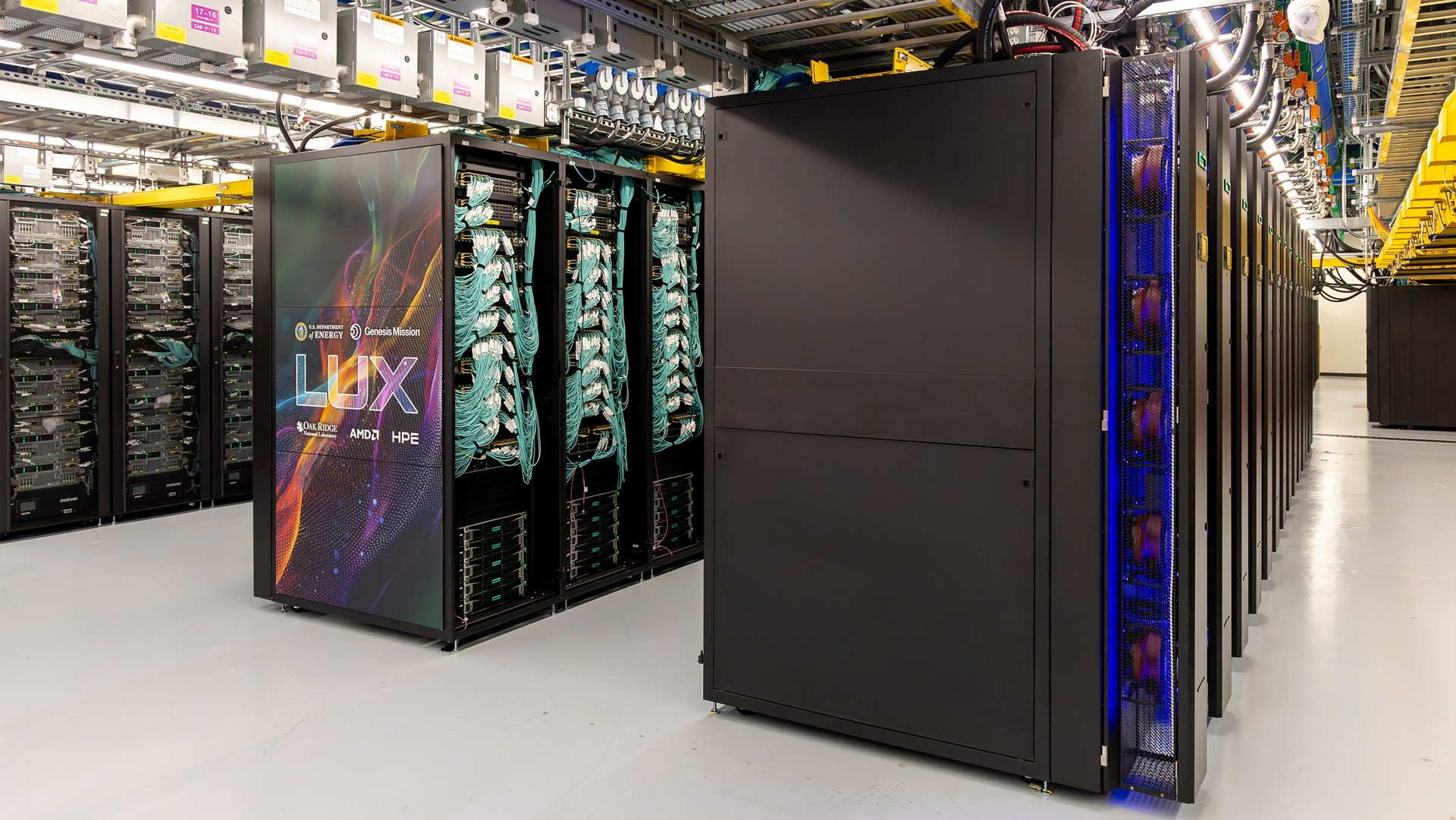
That’s why partnerships matter. The technology company behind this perspective focuses on advancing AI through high-performance computing solutions and strategic partnerships—exactly the kind of collaboration needed to strengthen alternative ecosystems. When AMD works with open-source communities to improve PyTorch support on ROCm, or when Intel contributes to oneAPI standards, it’s not just marketing. It’s about building the foundations that allow real choices to exist.
What You Can Actually Do Today
If you’re building AI systems right now, here’s what works: Start simple. Use PyTorch or TensorFlow with a known dataset and a well-documented architecture. Run it locally to understand the components. Then, consider moving to a managed environment like Amazon SageMaker or Azure ML only if it reduces operational overhead without sacrificing control.
Use tools like Kubeflow or Ray to manage scale if needed, but don’t adopt them just because they’re trendy. Evaluate them based on whether they solve a real bottleneck. Similarly, explore CUDA alternatives—but only if your long-term roadmap depends on avoiding vendor lock-in. And always monitor inference costs. A model might be accurate, but if it costs three times as much to serve, it’s a liability.
Finally, stay close to the hardware. Understand what happens when your model runs on a GPU. Learn how memory is allocated. Know the difference between tensor core utilization and memory bandwidth saturation. These aren’t just details for infra teams—they’re critical to building efficient systems.
The landscape of AI development tools is crowded, but the good ones don’t scream for attention. They quietly let you focus on the problem at hand. Whether it’s accelerating matrix multiplication or simplifying distributed training, their value shows up not in the tool itself, but in how little you notice it while building something meaningful.